

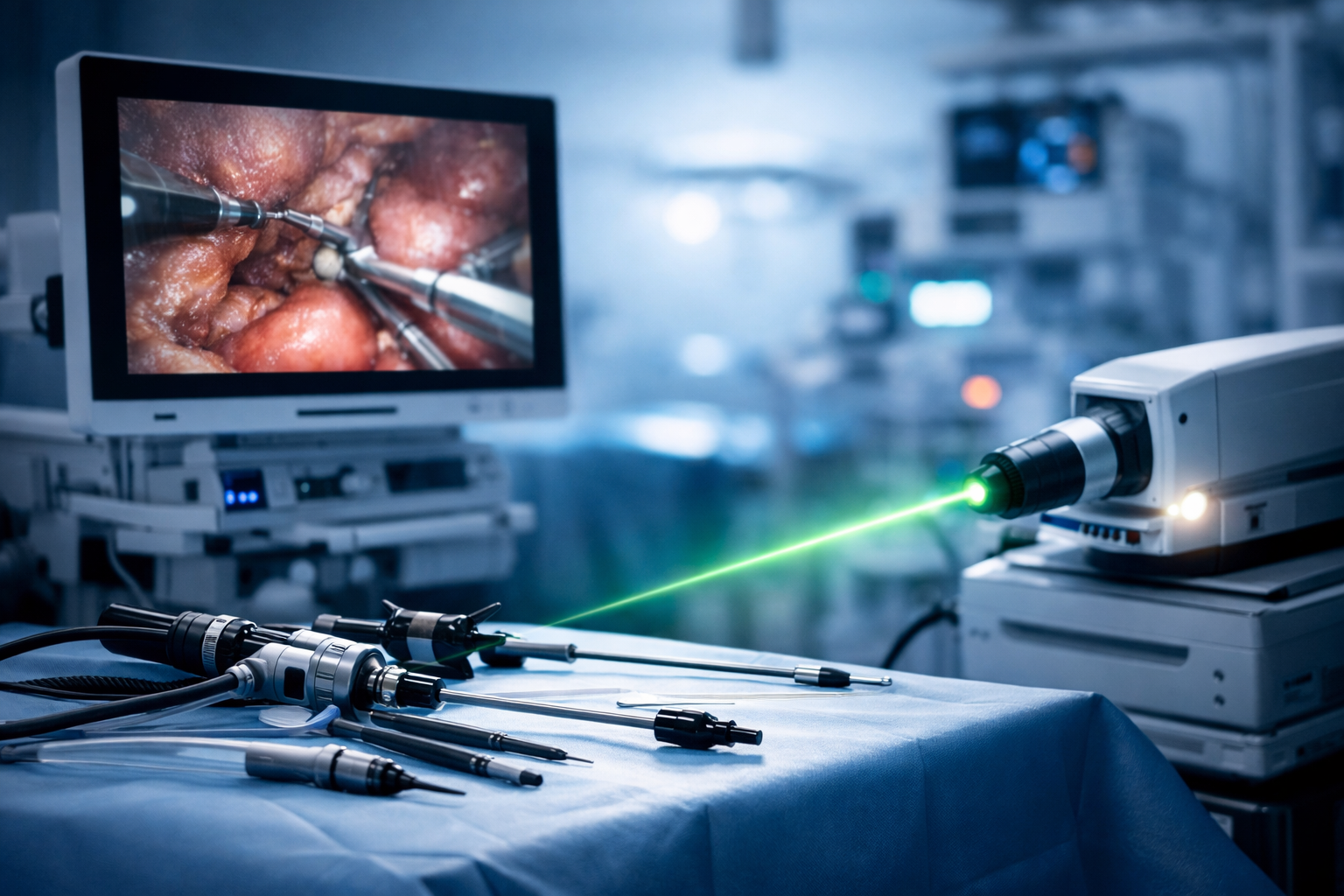
Laparoscopic surgery and laser surgery are advanced minimally invasive procedures used to treat many medical conditions with greater safety, precision, and quicker recovery for patients.
1. Gallbladder Removal with Minimal Invasion
Laparoscopic gallbladder surgery, also called laparoscopic cholecystectomy, has changed traditional gallbladder operations into a minimally invasive procedure that many patients can undergo as a day-care surgery. Instead of a large abdominal cut, surgeons create four very small incisions, each less than half an inch. A high-definition camera guides the surgeon while special instruments safely remove the gallbladder through these tiny openings.
Patients suffering from gallstones, repeated gallbladder infections, or gallbladder polyps benefit greatly from this minimally invasive surgery. Recovery is significantly faster—most patients return to normal activities within about a week, compared with four to six weeks after open surgery. The small incisions also result in minimal scarring and noticeably less post-surgical discomfort.
Laser surgery further improves accuracy during the procedure. Focused laser energy helps surgeons separate tissues and control bleeding effectively. Blood vessels seal instantly as they are cut, creating a clearer surgical field. This precision reduces surgical time and protects nearby tissues around the gallbladder.
2. Effective Endometriosis and Fibroid Treatment
Endometriosis is a common condition affecting millions of women and often causes severe pelvic pain and fertility issues. Laparoscopic surgery allows surgeons to carefully examine the pelvic organs and identify endometrial implants with exceptional clarity. The magnified camera view helps detect hidden scar tissue and adhesions that may not appear in standard imaging tests.
Laser technology is frequently used to remove or destroy abnormal endometrial tissue with great precision while preserving surrounding healthy structures. Different laser types can target specific tissue layers—CO₂ lasers are particularly effective for superficial lesions, while deeper implants may be treated with other specialized laser systems. This targeted approach helps relieve symptoms while protecting reproductive organs.
Fibroids can also be treated effectively using minimally invasive laparoscopic and laser techniques. During a laparoscopic myomectomy, surgeons remove fibroids while preserving the uterus, allowing women to maintain fertility options. Laser energy helps seal the uterine muscle layers during reconstruction, reducing bleeding and shortening surgical time. Even larger fibroids can often be removed through small incisions using advanced surgical techniques.
3. Hernia Repair with Superior Results
Both inguinal hernias and ventral hernias respond very well to laparoscopic hernia repair. Techniques such as Total Extraperitoneal (TEP) and Transabdominal Preperitoneal (TAPP) repair allow surgeons to place mesh reinforcement from inside the abdominal wall. This method covers the entire weakened area and provides stronger protection against recurrence compared to some traditional approaches.
Laser-assisted techniques can improve mesh integration with surrounding tissues. Controlled thermal energy stimulates collagen formation, helping the mesh bond more securely with the patient’s natural tissue. This process supports long-term stability and may reduce complications such as mesh displacement or chronic discomfort.
Complex abdominal wall hernias, including recurrent hernias after previous surgery, can also be effectively treated with laparoscopic techniques. The internal view provides surgeons with a clear understanding of weakened areas that may not be visible externally. Advanced minimally invasive methods help restore abdominal wall strength while keeping external scars small.
4. Diagnostic Procedures for Abdominal Issues
Diagnostic laparoscopy is considered one of the most reliable methods for identifying the cause of unexplained abdominal pain. It is particularly valuable in younger women when conditions such as appendicitis, ovarian disorders, or pelvic inflammatory disease are suspected. The direct visualization provided by laparoscopy helps eliminate uncertainty that sometimes occurs with CT scans or ultrasound imaging.
Patients with chronic pelvic pain can benefit greatly from laparoscopic evaluation. Adhesions resulting from earlier infections or previous surgeries can be identified and treated during the same procedure. Surgeons can also perform liver biopsies, collect peritoneal samples, or stage certain cancers through this minimally invasive technique with minimal discomfort for the patient.
In some cases, a second-look laparoscopy may be recommended to assess healing after surgery or evaluate the success of treatment for conditions like endometriosis. Because the procedure is minimally invasive, patients generally tolerate repeat examinations much more comfortably than traditional open exploratory surgery.
5. Weight Loss Surgery Options
Laparoscopic bariatric surgery has transformed the treatment of obesity by offering several effective and minimally invasive weight loss procedures. One of the most common options is gastric sleeve surgery, where approximately 80% of the stomach is removed using small incisions. The remaining sleeve-shaped stomach helps control food intake while reducing hunger hormones.
Gastric bypass surgery is another widely performed bariatric procedure. In this operation, surgeons create a small stomach pouch and connect it directly to the small intestine, bypassing a large portion of the stomach and upper intestine. This combination of reduced food intake and decreased nutrient absorption leads to significant and sustained weight loss. Laparoscopic techniques also lower the risk of wound infections and hernias compared to open surgery.
Adjustable gastric banding remains an option for selected patients who prefer a reversible weight loss procedure. The band is placed laparoscopically around the upper stomach to regulate food intake with minimal surgical trauma. In cases where earlier bariatric procedures fail, laparoscopic revision surgery can convert bands to gastric sleeves or bypass procedures safely.
Laser technology is especially helpful during complex revision surgeries where scar tissue from previous operations may be present. The precision of laser-assisted tissue dissection allows surgeons to work through adhesions carefully while maintaining excellent bleeding control. This approach reduces complications and improves surgical outcomes in challenging cases.