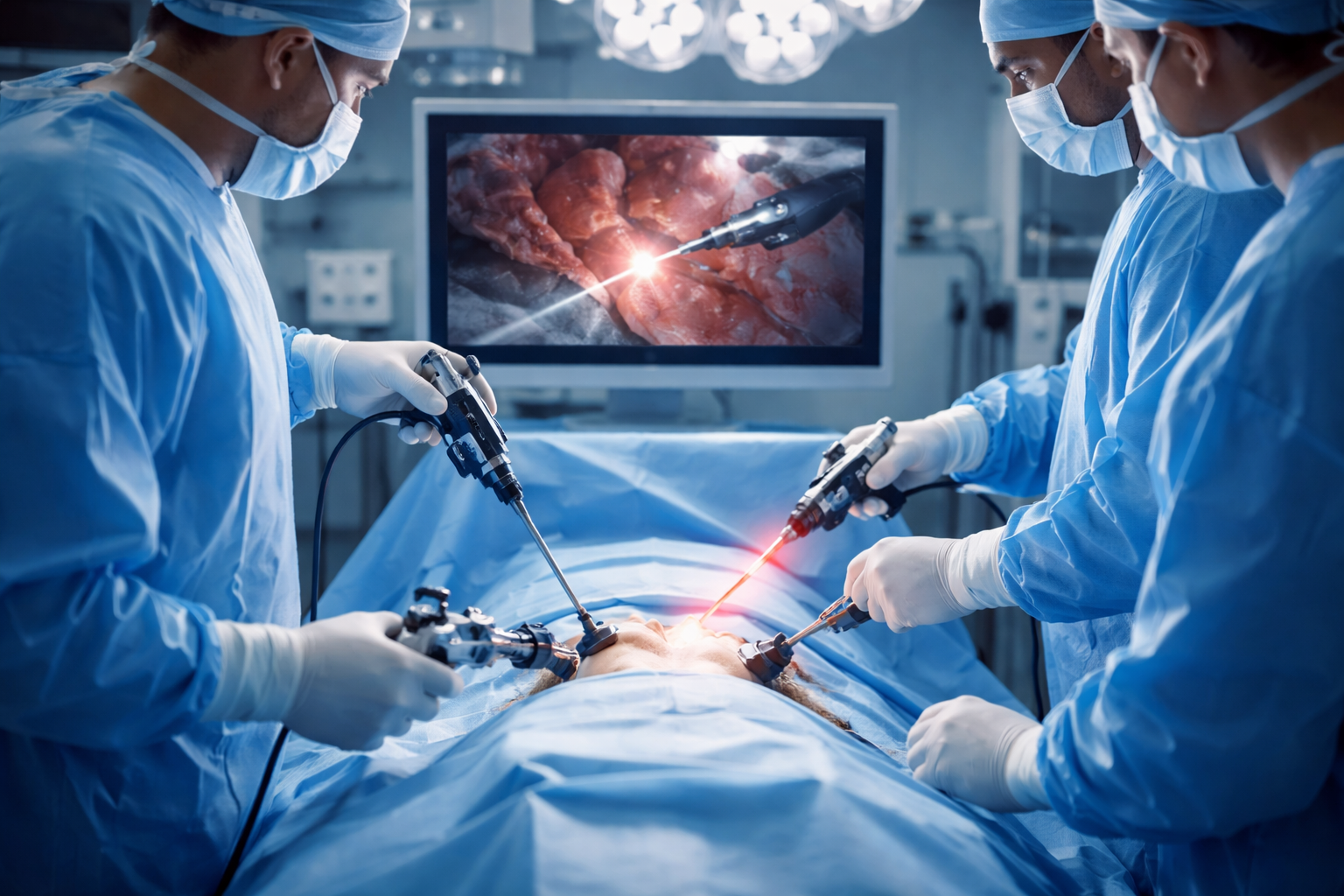

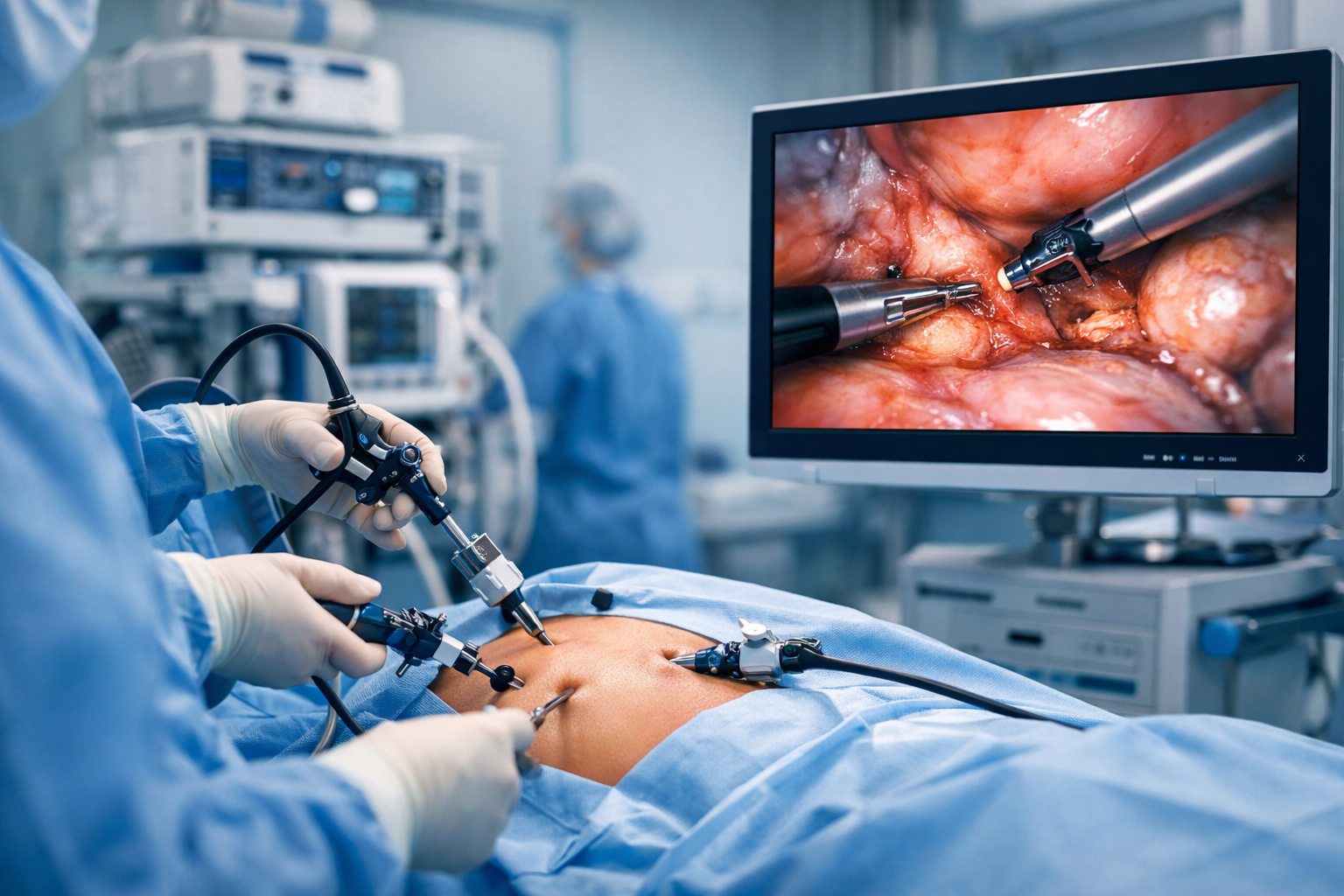
Below are some of the major benefits of modern laparoscopic surgery. These points help explain why many patients today choose minimally invasive surgery instead of traditional open surgical procedures.
1. Minimal scarring with faster healing times
Laparoscopic surgery changes the way many surgical procedures are performed by using only very small incisions, usually about 5–10 millimeters in size. These tiny openings are very different from traditional open surgery, which normally requires a much larger cut that may extend several inches. Through these small entry points, surgeons insert specialized instruments and a small camera known as a laparoscope to view and operate inside the body.
Because the incisions are small, there is much less damage to surrounding tissues. This allows the body to heal faster compared to conventional surgery. Since less tissue needs to repair itself, the natural healing process becomes more efficient. Many patients notice that their incision sites begin improving within a few days rather than taking several weeks as seen in open procedures.
Over time, the scars from laparoscopic surgery become very small and often barely visible. In many cases, the marks fade into thin lines that are difficult to notice after a few months. This cosmetic benefit is especially important for procedures performed on visible parts of the body, helping patients feel more comfortable and confident about their appearance after surgery.
2. Reduced post-operative pain and discomfort
Pain after surgery is usually much lower with minimally invasive laparoscopic surgery. Since the procedure requires only small incisions, there is significantly less trauma to muscles and surrounding tissues. In contrast, traditional open surgery often involves cutting through multiple tissue layers, which can result in more pain during the recovery period.
Because of this reduced surgical impact, patients generally require fewer pain medications after the procedure. While people recovering from open surgery may depend on strong prescription painkillers for several weeks, many laparoscopic patients switch to mild or over-the-counter medications within just a few days. This lowers the risk of medication side effects and helps patients feel more comfortable during recovery.
Lower pain levels also help patients move around sooner after the operation. Better mobility improves blood circulation and supports faster healing. Patients are often able to walk within hours after surgery, which reduces the chances of complications such as blood clots and helps speed up the overall recovery process.
3. Shorter hospital stays and quicker recovery
One of the most appreciated benefits of laparoscopic surgery is the shorter hospital stay. Procedures that previously required several days of hospitalization can now often be performed as day-care surgeries. Many patients are admitted in the morning and return home later the same day, allowing them to recover comfortably in their own homes.
The recovery time following laparoscopic vs open surgery is also much shorter. Traditional open procedures can keep patients away from work or normal activities for six to eight weeks. With laparoscopic surgery, many individuals resume daily routines within one to two weeks, and office-based work can sometimes begin even earlier.
Several factors contribute to this faster recovery surgery approach. Smaller incisions mean less tissue damage, reduced inflammation, and minimal blood loss. These advantages allow the body’s immune system to focus more effectively on healing, enabling patients to regain strength and return to normal life much sooner.
4. Lower risk of infection and complications
Another important advantage of laparoscopic surgery is the lower risk of infection. Smaller incisions create fewer entry points for bacteria, which helps reduce the chances of wound infections. Additionally, internal organs are exposed to the external environment for a shorter period compared to open surgery, further minimizing contamination risks.
Bleeding complications are also less common with laparoscopic procedures. The high-definition camera used during surgery provides surgeons with a clear, magnified view of internal structures. This allows them to identify blood vessels precisely and control bleeding more effectively while performing delicate surgical steps.
Other complications such as hernias at the incision site are less likely with minimally invasive surgery. Since the abdominal wall is not opened widely, its strength and structure remain largely intact. Laparoscopic techniques also reduce the chance of internal adhesions, which occur when tissues stick together during healing due to excessive manipulation during surgery.